


Recently, I’ve had several conversations with patients about gum recession, little notches near the gumline and teeth that react sharply to cold. For some, hearing that an area might need covering was understandably worrying.
I wanted to put the explanation I give in the clinic in one place. A notch does not automatically mean a filling is needed. But it is worth understanding why it developed, whether it is changing and what we can do to protect the tooth.
Why does a tooth become sensitive?
The outside of the crown is covered by enamel. Beneath it is dentine, which contains tiny channels connected to the nerve inside the tooth. If dentine becomes exposed near the gumline, cold drinks, sweet foods or even cold air can cause a short, sharp sensation.
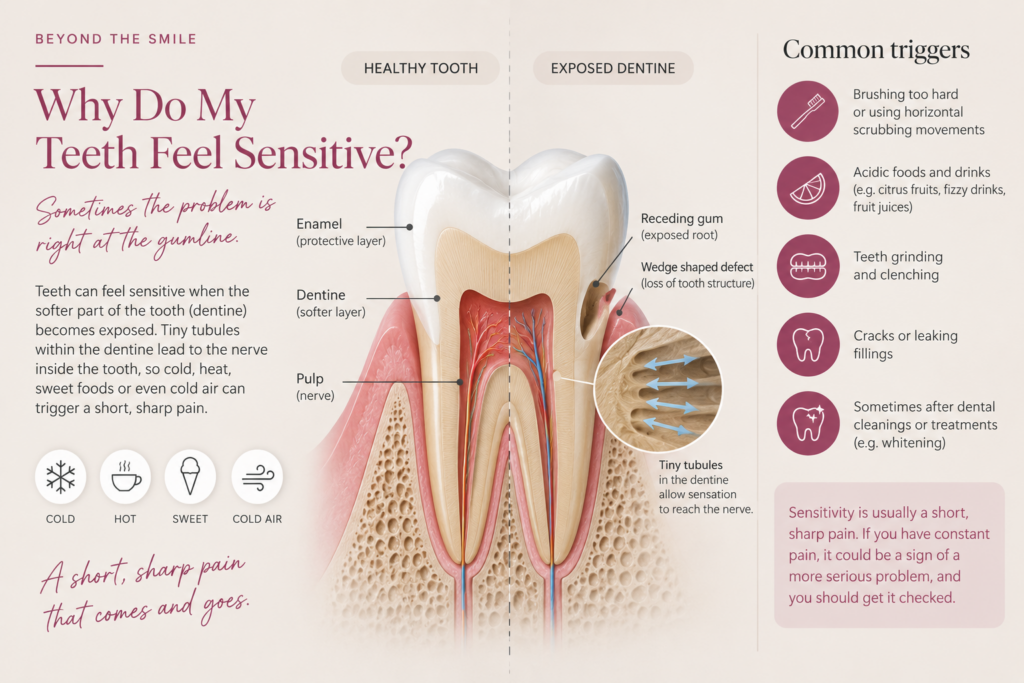
This diagram shows where sensitivity can come from. Gum recession and a notch in the tooth can occur together, but they are not quite the same thing.
What is the notch near my gum?
A wedge shaped defect is an area where tooth structure has been lost close to the gumline. It may be shallow and barely noticeable, or deep enough to catch your fingernail. The gum may also have receded, exposing part of the root.
There is not always one simple cause. Brushing habits, acidic foods and drinks, and the forces placed on a tooth can all be relevant. I look at the pattern across the mouth, rather than assuming that one factor explains every notch. For example, patients who brush across their teeth with a manual brush often have more noticeable wear on the side they find easiest to reach.
These areas can feel alarming when you first notice them. Finding one does not mean your tooth is about to break. It does mean we should check it, work out what may be contributing to it and decide whether monitoring or treatment makes sense.
Does every wedge shaped defect need covering?
No. If an area is shallow, stable, easy to keep clean and causes no significant symptoms, we may simply photograph and monitor it. We can also look at brushing technique and ways to manage sensitivity.
I am more likely to discuss covering an area if it is becoming deeper, remains sensitive, traps plaque or is difficult to keep clean. The decision depends on the tooth and the person, not just how the notch looks in a photograph.
Here is an example of an area I treated with tooth coloured composite:
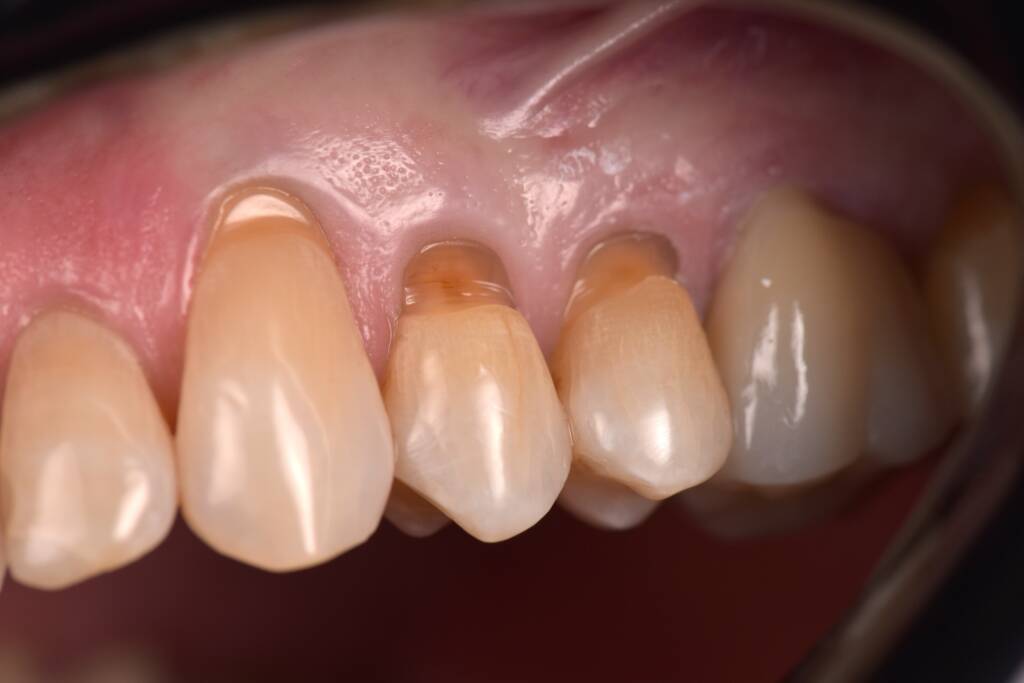
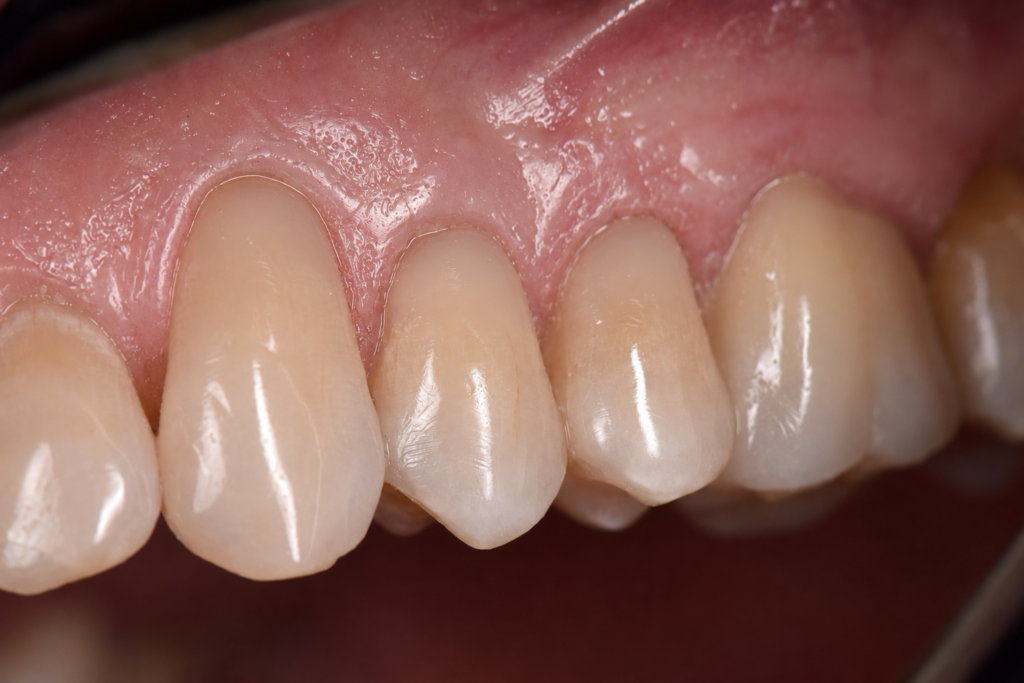
Before and after: this case shows what covering selected areas can look like. It does not mean every area of recession or wear needs a filling.
Brushing technique makes a difference
Many people brush thoroughly but use more pressure or movement than they realise. With a manual brush, repeated horizontal scrubbing along the gumline is a habit I ask patients to change. Use gentle circular movements and make sure the bristles reach where the tooth meets the gum.
If you use a sonic brush, I generally recommend gentle circular movements without pressing hard. With a small round Oral B brush head, spend time on each tooth individually. Move it slightly from the crown towards the gumline so that you clean that margin, then move to the next tooth. There is no need to scrub the brush back and forth.
The technique that suits you may need adjusting around areas of recession, restorations or gum inflammation. I can show you on your own teeth during an appointment.
What can help with the sensitivity?
A toothpaste for sensitive teeth is often a useful first step. Some ingredients reduce the nerve’s response to triggers; others help block the tiny channels in exposed dentine. Use it consistently and give it time to work.
If the sensitivity continues, I would want to check the tooth rather than simply keep changing toothpaste. Depending on what we find, options may include applying a desensitiser in the practice or covering an exposed area with composite. The aim is to address the cause as well as the sensation.
Pain that lingers, happens spontaneously or feels different from your usual brief response to cold deserves an assessment. Sensitivity is common, but it is not always caused by an exposed root or a wedge shaped defect.
What should I do if I have noticed a wedge shaped defect?
Mention it at your next dental visit, particularly if it seems to be getting deeper or has become sensitive. We can compare photographs over time, look at your brushing technique and decide together whether the area needs treatment.
The important thing is to understand what is happening to your tooth. Quite often, that conversation is much less frightening than imagining what a notch might mean.