

Composite Bonding
Composite bonding is a minimally invasive cosmetic treatment that can improve the shape, colour and overall appearance of your teeth while preserving as much of your natural tooth structure as possible. Whether you have chipped teeth, worn edges, small gaps or uneven tooth shapes, composite bonding can often transform your smile without the need for more invasive treatment.
For me, successful composite bonding is about much more than simply making teeth look better. I believe beautiful dentistry should also be healthy dentistry. Healthy tooth structure is precious and, once it has been removed, it can never be replaced. That philosophy guides every treatment I provide, helping me create smiles that not only look natural but also function comfortably, are easy to maintain and support long-term oral health.
Composite bonding is one of the most technique-sensitive procedures in cosmetic dentistry. Every tooth is individually sculpted by hand, and achieving a beautifully natural result depends not only on the materials used, but also on the clinician’s understanding of tooth anatomy, smile design, colour, light and proportion. It is this combination of technical precision, careful planning and artistic attention to detail that allows me to create smiles that look as though nature got it exactly right.
No two smiles are the same, and I don’t believe they should be treated that way. Every treatment is individually designed to complement the person behind the smile. Another advantage of composite bonding is that it can often be maintained, repaired and refined over time rather than completely replaced, allowing your smile to evolve while preserving as much healthy tooth structure as possible.
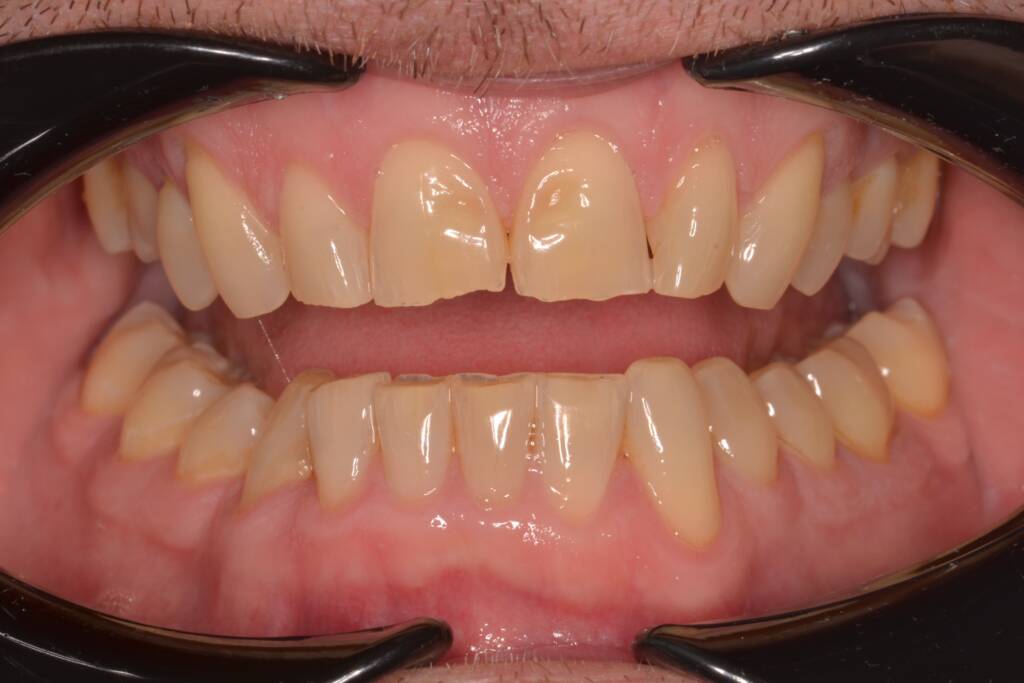
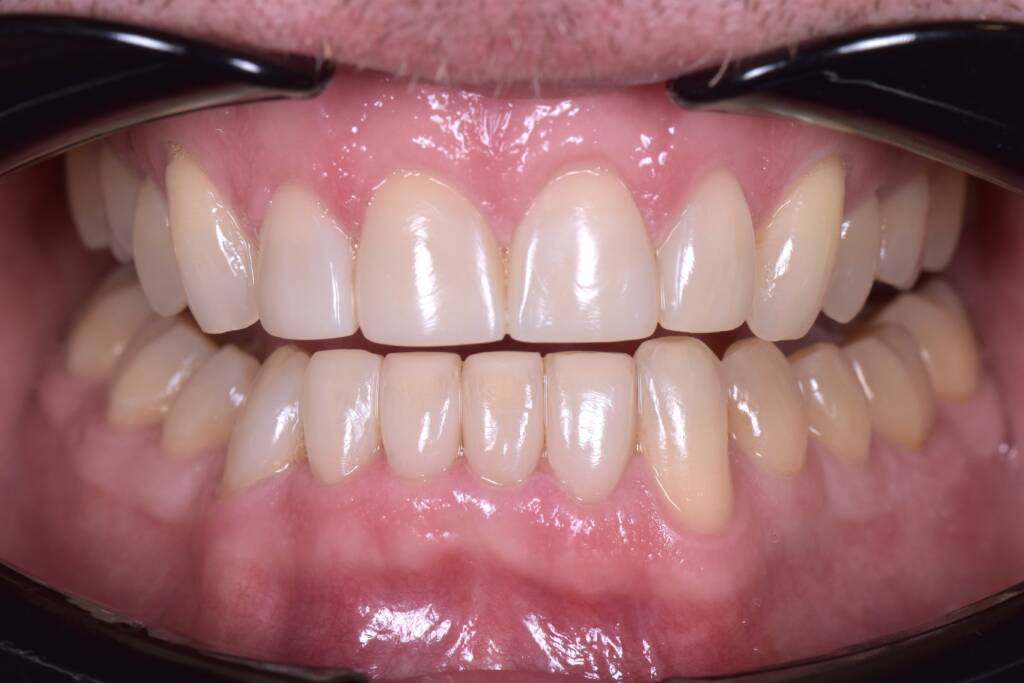
Before (left) and After (right): This patient completed three weeks of Boutique Home Whitening before having composite bonding placed in two sessions on his upper and lower front teeth.
Every smile tells a different story. Explore real before and after composite bonding cases from my patients to see how composite bonding can be used to restore chipped teeth, close gaps, treat peg lateral incisors, improve black triangles and create natural-looking smile transformations.
You’ll also find answers to some of the questions I am most commonly asked about composite bonding, helping you understand your treatment options and decide which approach is right for your smile.
Composite Bonding – FAQ’s
Composite bonding is suitable for many patients who would like to improve the appearance of their smile without extensive treatment.
It can be an excellent option if you have chipped, worn or uneven teeth, small gaps between your teeth, peg-shaped lateral incisors, black triangles, or areas of discolouration that cannot be improved with whitening alone.
The best way to determine whether composite bonding is right for you is through a comprehensive cosmetic consultation. I will assess your smile, your bite and your overall oral health before discussing the treatment options that are most appropriate for your individual needs.
In some cases, composite bonding alone provides the ideal solution. In others, it may be combined with treatments such as Invisalign, whitening or porcelain veneers to achieve the most natural and long-lasting result.
Composite bonding is an extremely versatile treatment and can be used to improve a wide range of cosmetic concerns while preserving as much healthy tooth structure as possible.
Depending on your individual smile, composite bonding may be used to:
- Repair chipped or worn teeth
- Close small gaps between teeth (diastema closure)
- Improve the appearance of black triangles between teeth
- Restore peg-shaped lateral incisors
- Reshape uneven or irregular teeth
- Improve the appearance of discoloured teeth
- Replace old or failing composite restorations
- Refine the final result after Invisalign treatment
Every smile is different. During your consultation, I will assess your teeth, bite and smile goals before recommending the treatment that will provide the most predictable and natural-looking outcome.
Composite bonding and porcelain veneers are both excellent options for improving the appearance of your smile. Rather than asking which treatment is “better”, the more important question is which treatment is most appropriate for your individual smile.
The answer depends on many factors, including the shape and position of your teeth, your bite, your smile goals and your budget. During your consultation, I will explain the advantages and limitations of each option so that together we can decide on the approach that best suits you.
For many patients, composite bonding is an excellent first step. It provides the opportunity to improve the shape, size and appearance of the teeth without immediately committing to porcelain veneers. Patients can enjoy their new smile for many years and, when the composite naturally reaches the end of its lifespan, decide whether they would like to replace it with new composite bonding or move on to porcelain veneers.
Another advantage of composite bonding is that small chips or areas of wear can usually be repaired without replacing the entire restoration. Porcelain veneers, on the other hand, often require replacement if they become damaged.
There is no one-size-fits-all solution. My role is to help you understand the different options and recommend the treatment that best balances aesthetics, function, longevity and your individual priorities.
Absolutely. In fact, many of my patients choose Invisalign before composite bonding.
By first moving the teeth into a more ideal position, I can often achieve a more natural-looking result while preserving even more of your natural tooth structure. This approach can improve smile proportions, reduce the amount of composite required and create a more stable long-term outcome.
Planning treatments together also allows me to design your final smile more precisely. Rather than simply making teeth look straighter or whiter, my goal is to create a smile that looks balanced, functions comfortably and still feels completely natural.
For many patients, the combination of Invisalign and composite bonding provides a beautiful result with a minimally invasive approach.
If you are considering whitening your teeth, it is usually best to complete whitening before composite bonding.
Unlike natural teeth, composite resin does not respond to whitening treatments. Whitening your teeth first allows me to match the composite to your desired tooth shade, helping to create a more harmonious and natural-looking result.
If you are unsure whether whitening is right for you, we can discuss the different options during your consultation and create a treatment plan that best suits your smile goals.
Your consultation is an opportunity for us to discuss what you would like to improve about your smile. I will also assess aspects of your smile that you may not have noticed yourself and explain the different treatment options available.
To help plan your treatment, I may take clinical photographs, digital scans and, where appropriate, create a digital or physical mock-up of your proposed smile. These records allow us to carefully evaluate tooth shape, proportions, bite and overall smile harmony before any treatment begins.
Following your assessment, I will create a personalised treatment plan tailored to your smile, your goals and your long-term oral health.
The length of treatment depends on the number of teeth being treated and the amount of change required.
Following your consultation, patients having composite bonding on one arch can usually expect one longer treatment appointment. Around two weeks later, I arrange a review appointment to assess your new smile, carry out any final polishing if needed and make any small refinements to ensure you are completely happy with the result.
If both the upper and lower teeth are being treated, I usually complete one arch at a time. This allows me to work carefully and precisely without making the appointments unnecessarily long. Many patients choose to begin with the lower teeth before returning for treatment of the upper arch.
Composite bonding is a highly technique-sensitive treatment, and every tooth is individually sculpted by hand. The time required for each tooth varies depending on the complexity of the case. Small refinements can often be completed relatively quickly, while more extensive changes to tooth shape or worn teeth naturally require more time.
Rather than rushing treatment, I prefer to allow the time needed to achieve a natural-looking result that is both functional and long-lasting.
Like your natural teeth, composite bonding can gradually stain over time. Regular consumption of coffee, tea, red wine and tobacco products may all contribute to surface staining.
For this reason, I generally do not recommend composite bonding for patients who smoke, as maintaining a natural appearance can be more challenging.
Unlike natural teeth, composite resin cannot be whitened to a lighter shade. However, this is often misunderstood. While whitening gel cannot make composite lighter than its original shade, it can help remove superficial staining from the surface of the composite, just as it does on natural teeth. For this reason, I often recommend that patients continue their regular whitening top-ups after treatment. This helps maintain the appearance of both the natural teeth and the composite restorations, provided they were originally matched to the desired tooth shade.
Regular hygiene appointments, good oral hygiene and professional polishing also play an important role in keeping your composite bonding looking its best for many years.
Composite bonding is a durable treatment and, with good care, many patients can expect it to last around 5 to 10 years before any repairs or replacement are required.
Its longevity depends on a number of factors, including your bite, oral hygiene, diet, lifestyle and whether you grind or clench your teeth.
One factor that is often overlooked is the natural movement of teeth over time. Even when the composite itself remains in excellent condition, teeth can gradually shift as we age, which may affect the appearance of your smile. For this reason, I usually recommend wearing a retainer at night following treatment. This helps maintain the alignment of your teeth and can also protect the composite from grinding or clenching forces, helping to preserve your result for as long as possible.
Regular reviews allow me to monitor your restorations and address any small areas of wear before they become more significant.
Composite bonding is a durable and reliable material, but like your natural teeth, it is not indestructible.
Small chips or areas of wear can occur over time, particularly if excessive forces are placed on the teeth. Habits such as biting fingernails, chewing pens, opening packaging with your teeth or biting directly into very hard foods can increase the risk of damage. These habits are not ideal for your natural teeth either, but they can place additional stress on composite restorations.
Before you leave the practice, I carefully check your bite and jaw movements, asking you to move your teeth in different directions to ensure the new restorations function comfortably and that no excessive forces are being placed on individual teeth. However, it is impossible to reproduce every movement your teeth make during everyday activities such as eating or while grinding and clenching during sleep.
If a small chip is going to occur as a result of your bite adapting to the new restorations, it will usually happen within the first few weeks or months after treatment. This is one of the reasons why your review appointment is such an important part of the treatment process, allowing me to make any small refinements if required.
Another important factor is teeth grinding or clenching, particularly during sleep. Even if there are no obvious signs of grinding, I usually recommend that all of my composite bonding patients wear a retainer at night. Not only does this help protect the bonding from excessive forces, but it also helps maintain the position of your teeth. Teeth naturally have a tendency to move over time, and wearing a retainer helps preserve both the alignment of your teeth and the appearance of your smile.
One advantage of composite bonding is that, in many cases, small chips can be repaired without replacing the entire restoration. Wearing your retainer at night is one of the simplest ways to protect your investment in your smile. However, If composite bonding repeatedly chips or fractures because of heavy biting forces, teeth grinding or an unstable bite, it may be important to address the underlying cause as well as repairing the tooth.
One of the greatest advantages of composite bonding is that it is a minimally invasive treatment. In many cases, little or no healthy tooth structure needs to be removed before the composite is placed.
Many of my composite bonding cases can be completed without any drilling of the natural teeth. Where preparation is required, it is usually minimal and only carried out when it contributes to a better aesthetic or long-term result.
Healthy tooth structure is precious. Once it has been removed, it can never be replaced. That is why preserving as much of your natural tooth as possible is at the heart of every treatment I provide.
My treatment philosophy is based on the principle that beautiful dentistry should also be healthy dentistry. Rather than recommending the same treatment for every patient, I will always advise the least invasive option that is most likely to achieve your goals while protecting the long-term health of your teeth.
It is also important to understand that composite bonding adds to your natural tooth rather than replacing it. Unlike many restorative treatments, composite bonding can often be repaired, refined or replaced in the future without automatically committing you to more extensive treatment.
During your consultation, I will explain exactly what is required for your individual case, so you can make an informed decision before any treatment begins.
Looking after composite bonding is very similar to caring for your natural teeth. With good oral hygiene and regular maintenance, your restorations can remain healthy and beautiful for many years.
To help protect your smile, I recommend:
- Brushing twice a day with a fluoride toothpaste.
- Cleaning between your teeth every day using floss and interdental brushes.
- Wearing your retainer at night as recommended to protect your bonding and help maintain the position of your teeth.
- Attending your regular dental examinations and hygiene appointments.
- Avoiding habits such as biting fingernails, chewing pens or opening packaging with your teeth.
Like natural teeth, composite bonding can gradually stain and lose some of its original surface shine over time. Regular professional maintenance and good home care help preserve the appearance and longevity of your restorations.
Professional whitening top-ups can help remove superficial staining from both your natural teeth and the surface of the composite, although they will not make the composite itself lighter than the shade it was originally placed.
I generally recommend avoiding highly abrasive whitening toothpastes, as they can gradually dull the polished surface of the composite and make it more prone to future staining.
One of the advantages of composite bonding is that it can often be maintained, repaired and refined over time rather than completely replaced. With regular reviews and appropriate maintenance where needed, my aim is to help you enjoy your smile for many years while preserving as much of your natural tooth structure as possible.
Yes. I stand behind the quality of my work and want every patient to feel confident in their new smile.
Composite bonding is completed entirely by hand and carefully checked before you leave the practice. I assess your bite and jaw movements to ensure the restorations function comfortably and that no excessive forces are placed on individual teeth. However, every person’s bite is unique, and it is impossible to recreate every chewing movement or parafunctional habit during a dental appointment. Occasionally, a small chip may occur as your bite adapts to the new restorations. If this happens, it almost always becomes apparent within the first few weeks or months after treatment.
For this reason, every composite bonding patient is invited back for a review appointment approximately two weeks after treatment. This allows me to assess your new smile, make any small refinements if required and ensure everything is functioning comfortably.
I also include a 12-month aftercare guarantee with my composite bonding treatment. If a small chip occurs as a result of normal function during this period, I will repair it free of charge.
The aftercare guarantee is provided on the understanding that you:
- attend your scheduled review appointment
- attend your routine dental examinations and hygiene appointments every six months (or as recommended)
- maintain good oral hygiene
- follow the aftercare advice discussed during treatment, including wearing your retainer as recommended
These measures help protect your composite bonding and allow me to identify and address any small issues before they become more significant.
Because beautiful dentistry should also be healthy dentistry, I see the review and aftercare appointments as an essential part of your treatment – not an optional extra. My goal is not simply to create a beautiful smile, but to provide results that remain healthy, functional and long-lasting for years to come.
The cost of composite bonding can vary considerably between practices and clinicians, and it is understandable that patients wonder why.
While the materials themselves are relatively similar, the biggest difference is not the composite – it is the time, planning, experience and attention to detail that go into creating a natural-looking result.
Composite bonding is one of the most technique-sensitive procedures in cosmetic dentistry. Every tooth is built entirely by hand, and depending on the complexity of the case, I typically spend between 45 and 60 minutes carefully placing, sculpting, refining and polishing each individual tooth. Every stage of the procedure contributes to the final appearance, function and longevity of the restoration.
Manufacturers provide detailed clinical protocols for bonding procedures because each step – from isolation and adhesive techniques to layering, curing and finishing – is essential for achieving a strong, durable and aesthetic result. These steps simply cannot be rushed without potentially compromising the outcome.
Unfortunately, I regularly see patients who have had composite bonding placed elsewhere and require repairs or complete replacement only a few years later. Common problems include rough surfaces that stain more easily, overhanging margins that make cleaning difficult, poor contouring that affects the gums, or restorations that chip prematurely. In many cases, these issues could have been avoided through careful planning, meticulous finishing and allowing sufficient clinical time.
Choosing composite bonding based on price alone can sometimes become more expensive in the long run. My approach is to take the time needed to create restorations that not only look natural on the day they are placed, but are also designed to remain healthy, functional and easy to maintain for years to come.
Composite bonding is one of the treatments I enjoy most because it combines science, precision and creativity. Every smile presents a unique challenge, and no two patients should ever be treated in exactly the same way.
My philosophy is simple: beautiful dentistry should also be healthy dentistry. Rather than focusing solely on creating an attractive smile, I carefully consider your bite, your gums and the long-term health of your teeth. My aim is always to recommend the least invasive treatment that will achieve the best possible result.
Creating natural-looking composite bonding is highly technique-sensitive. It requires an understanding of tooth anatomy, colour, light, smile design and function, as well as the patience and attention to detail needed to sculpt every tooth entirely by hand.
Creativity has always been a big part of who I am. Whether designing our family home, picking up a camera or carefully sculpting composite resin under magnification, I enjoy creating things that are both beautiful and functional. Cosmetic dentistry allows me to combine that creative mindset with science, precision and meticulous attention to detail.
I am committed to continually refining my skills and regularly invest in postgraduate education. My training includes advanced hands-on courses such as Simplifi Composite Bonding with Dr Albert Gajdos, the Bioclear Method with Dr Claire Burgess, and the SmileFast Composite Bonding course with Dr Mide Ojo and Dr Thomas Sealey. Alongside formal training, I regularly study the latest clinical research, online education and new techniques to ensure I continue to develop my skills.
Training with different educators has allowed me to learn a variety of techniques and treatment philosophies rather than relying on a single approach. Whether I am restoring a chipped tooth, closing a gap, treating peg-shaped lateral incisors or improving black triangles, I can adapt my technique to suit each individual patient instead of making every smile fit the same solution.
Healthy tooth structure is precious. Once it has been removed, it can never be replaced. That is why every smile I create is designed not only to look beautiful today, but to support your oral health for many years to come.
Above all, I want my patients to leave with a smile that feels like their own – healthy, natural and confidently theirs. If, years later, someone notices your smile but not your dentistry, I’ve done my job well.