

Veneers
Porcelain veneers are thin ceramic shells individually crafted to enhance the shape, colour and overall appearance of your teeth. When carefully planned and designed, veneers can create beautifully natural results while complementing your facial features and smile.
For me, successful veneer treatment is about much more than simply creating whiter teeth. I believe beautiful dentistry should also be healthy dentistry. Every smile is planned with long-term oral health, function and stability in mind, creating results that not only look natural but also feel comfortable and stand the test of time.
Healthy tooth structure is precious. Once it has been removed, it can never be replaced. That philosophy influences every treatment I provide and is one of the reasons I often recommend Invisalign or composite bonding before considering veneers. In many cases, careful planning allows me to preserve more healthy tooth structure while achieving a more natural and harmonious result.
For me, veneer treatment is about careful planning as much as technical skill. Every detail, from tooth proportions to smile design and facial harmony, is considered long before any treatment begins.
My aim is never to create a smile that looks obviously treated, but one that simply looks as though nature got it exactly right. Every veneer is individually designed to complement the person behind the smile, because no two smiles should look the same. The goal is to create a smile that feels completely individual and right for you.
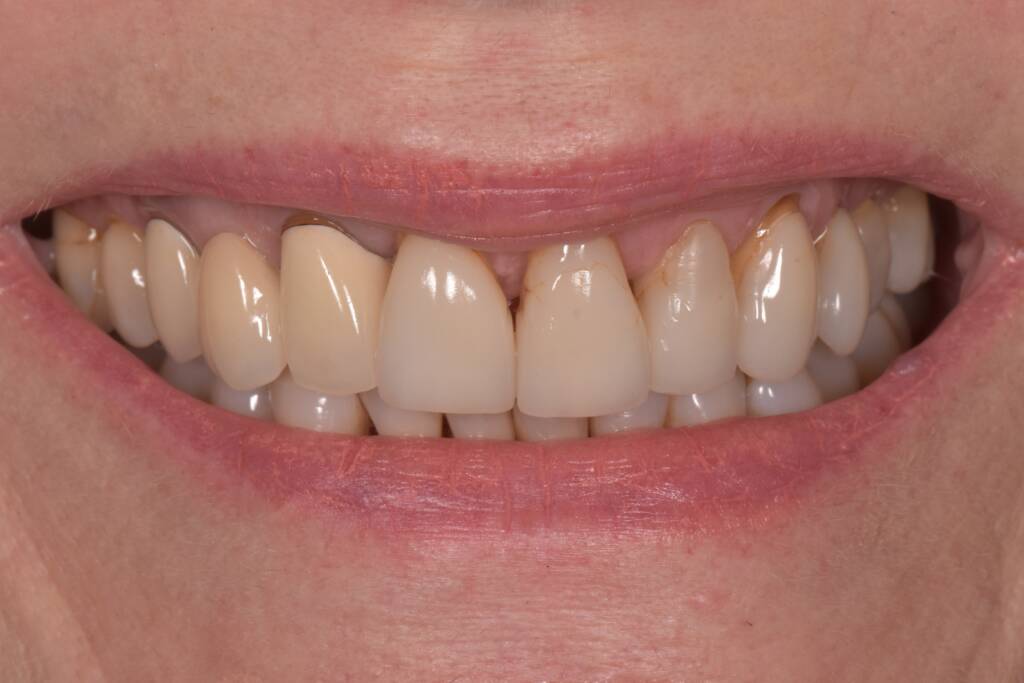
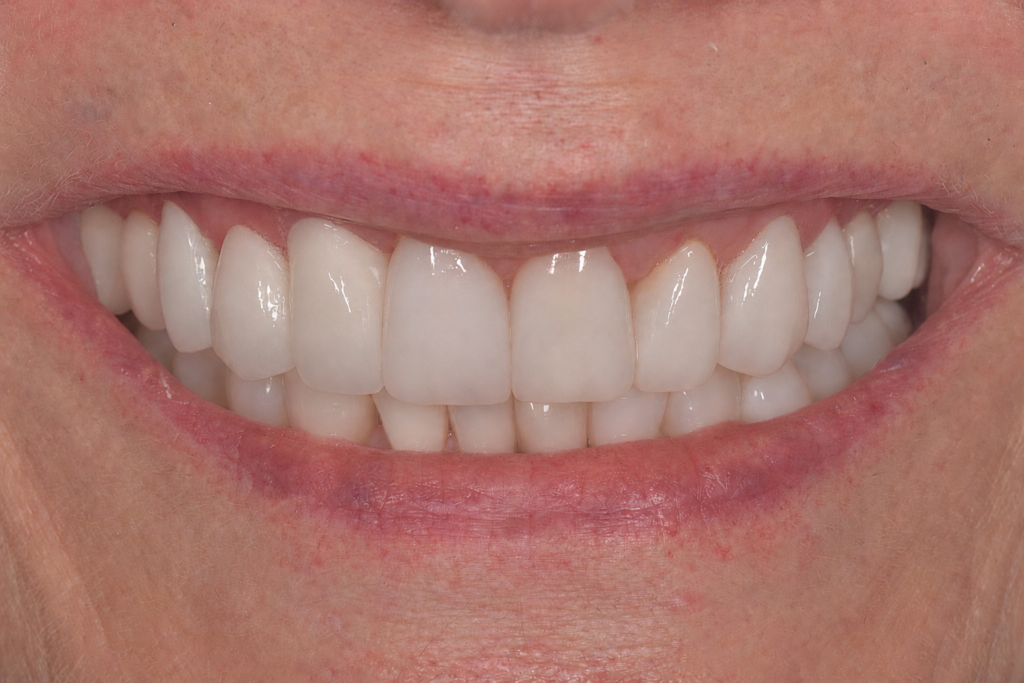
Before (left) and After (right): This patient wasn’t happy with her 20 year old veneers and her bridge anymore so we decided to replace her old restorations and finish everything off with Boutique Home Whitening.
Considering Veneers?
Porcelain veneers aren’t the right solution for every smile, and that’s exactly why careful planning matters.
During your consultation, we’ll discuss your goals, assess your teeth, bite and oral health, and explore whether veneers are the most appropriate option for your smile. In some cases, alternative treatments such as Invisalign or composite bonding may achieve a similar result while preserving more healthy tooth structure. discuss your smile goals and explore whether veneers are the right option for you.
You can also view before and after cases from my patients to see natural-looking smile transformations and real treatment results.
Porcelain Veneers – FAQ’s
Porcelain veneers can be used to improve a wide range of cosmetic concerns and are often recommended when changes to both tooth shape and colour are desired.
Veneers may be suitable for:
- Discoloured teeth that do not respond well to whitening
- Worn or shortened teeth
- Chipped or damaged teeth
- Uneven tooth shape or size
- Peg lateral incisors (small or underdeveloped teeth)
- Small gaps between teeth (diastema closure)
- Teeth with old restorations that affect appearance
- Deep staining caused by previous dental treatment, trauma or certain medications
In some cases, veneers can also be used to create a more balanced smile by improving the overall proportions and symmetry of the teeth.
The most appropriate treatment depends on your individual smile. For some patients, Invisalign or composite bonding may be a more conservative option. During your consultation, I will assess your teeth, bite and smile goals and help you understand which approach is most suitable for you.
Both treatments improve the appearance of teeth, but they differ in technique, durability, and long-term maintenance.
Composite bonding
- Usually completed in one appointment
- Minimally invasive and potentially reversible
- More affordable, typically from £400 per tooth
- May stain or wear over time
- Often needs maintenance sooner
Ceramic veneers
- Custom-made in a dental laboratory
- Highly aesthetic with excellent colour stability
- More resistant to staining and wear
- Typically longer-lasting
- Usually cost from £1200 per tooth
The higher cost reflects the detailed planning, laboratory craftsmanship, and multiple treatment stages involved.
Many patients worry about heavy tooth preparation. Social media has increased this concern, especially with heavily prepared “Turkey teeth” cases. In reality, modern cosmetic techniques are far more conservative.
Today’s advanced ceramic materials allow dentists to preserve much more natural tooth structure. In many cases, only minimal preparation is required. Some patients may even suit ultra-thin “no-prep” veneers, which need little or no enamel removal.
Many dramatic smile transformations online actually involve crowns rather than true veneers. Crowns require far more tooth reduction.
Modern aesthetic dentistry focuses on preserving healthy tooth structure while creating a balanced and natural-looking smile.
Veneers can be an excellent option for some patients, but they are not the right solution for every smile.
Suitability depends on several factors, including the condition of your teeth, the position of your teeth, your bite, oral hygiene, gum health and the changes you would like to achieve. In some cases, treatments such as Invisalign or composite bonding may be recommended before veneers, or may even provide a suitable alternative.
I believe healthy tooth structure is precious. Once it has been removed, it can never be replaced. For that reason, I only recommend veneers when I genuinely believe they are the most appropriate treatment for achieving your goals while supporting long-term oral health.
During your consultation, I will carefully assess your teeth, bite and smile before discussing all suitable treatment options. Together, we can decide on the approach that best suits your smile, lifestyle and long-term expectations.
Many cosmetic concerns are not caused by the teeth themselves, but by the position of the teeth. When teeth are crowded, rotated or unevenly aligned, it can be tempting to use veneers to mask these issues. However, this often requires more extensive treatment and can result in restorations that are larger or bulkier than necessary.
By moving the teeth into a better position first with Invisalign, I can often create a more ideal foundation for veneer treatment. This frequently allows me to preserve more healthy tooth structure, use more conservative preparation techniques and achieve a more natural-looking result.
In some cases, Invisalign may create such a significant improvement that only a small number of veneers are needed afterwards, or alternative treatments such as composite bonding become possible.
Healthy tooth structure is precious. Once it has been removed, it can never be replaced. For that reason, I will always consider whether orthodontic treatment could help achieve your goals more conservatively before recommending veneers.
My aim is never simply to create a beautiful smile, but to create one that looks natural, functions comfortably and remains stable over time.
Porcelain veneers are designed to be a long-term treatment and, with proper care, commonly last 10–15 years or longer. Many veneers remain functional and aesthetically pleasing for considerably longer than this.
Their longevity depends on several factors, including oral hygiene, bite forces, diet, lifestyle habits and regular dental maintenance. Patients who grind or clench their teeth may place greater forces on their veneers and are often advised to wear a retainer or protective night guard while sleeping.
One of the advantages of porcelain is its excellent resistance to staining and wear. Unlike natural teeth and composite bonding, porcelain veneers maintain their colour very well over time.
Regular dental examinations and hygiene appointments are important to help maintain both your veneers and the health of the teeth and gums supporting them. Small issues are often easier to address when identified early.
Although veneers are highly durable, no dental restoration lasts forever. Eventually, maintenance, repair or replacement may be required. Careful planning, high-quality materials and good long-term maintenance all contribute to maximising the lifespan of your veneers.
One of the main advantages of porcelain veneers is their excellent resistance to staining. Unlike natural teeth and composite bonding, high-quality ceramic veneers do not absorb pigments in the same way and therefore maintain their colour very well over time.
This means that drinks such as coffee, tea and red wine are far less likely to affect the appearance of porcelain veneers. For patients who are concerned about long-term colour stability, veneers can be an attractive option.
However, it is important to remember that veneers are attached to natural teeth. While the porcelain itself is highly stain-resistant, the surrounding natural teeth can still darken or stain over time. This may occasionally lead to a slight colour mismatch if the natural teeth change significantly after treatment.
Good oral hygiene, regular dental examinations and professional hygiene appointments all help maintain the appearance of both your veneers and your natural teeth.
If you are considering whitening your teeth, this is usually best completed before veneer treatment begins, as porcelain veneers cannot be whitened once they have been made.
Looking after porcelain veneers is very similar to caring for natural teeth. Good oral hygiene and regular dental maintenance play an important role in keeping both your veneers and the supporting teeth and gums healthy.
To help maintain your veneers, I recommend:
- Brushing twice daily with a fluoride toothpaste
- Cleaning carefully between your teeth using floss or interdental brushes
- Attending regular dental examinations and hygiene appointments
- Avoiding habits such as nail biting, chewing pens or opening packaging with your teeth
Although porcelain veneers are highly durable, they are not indestructible. Excessive forces from teeth grinding, clenching or biting hard objects can increase the risk of damage. For this reason, I often recommend wearing a retainer or protective night guard while sleeping, particularly if there are signs of grinding or clenching.
Unlike composite bonding, porcelain veneers are highly resistant to staining and generally maintain their surface finish and colour very well over time. However, regular professional maintenance remains important to ensure the surrounding teeth and gums remain healthy.
With good care and regular reviews, veneers can provide beautiful, natural-looking results for many years.
This is one of the most common questions I am asked, and the honest answer is: it depends on the individual case and the type of veneer being used.
Many patients worry about veneers because they have seen images online showing teeth being heavily reduced before treatment. In reality, modern cosmetic dentistry has become far more conservative. Advances in ceramic materials now allow us to create ultra-thin veneers that often require very little preparation and, in some cases, no preparation at all.
Healthy tooth structure is precious. Once it has been removed, it can never be replaced. That belief influences every treatment I provide and is one of the reasons I carefully assess whether veneers are truly the most appropriate option for each patient.
In some situations, Invisalign or composite bonding may be recommended before considering veneers. By improving the position of the teeth first, I can often preserve more natural tooth structure and achieve a more conservative result.
When veneers are the right treatment, my aim is always to preserve as much healthy enamel as possible while creating a smile that looks natural, functions comfortably and remains stable over time.
Like any dental treatment, veneers carry potential risks and limitations. Careful planning helps minimise these risks, but it is important to understand them before starting treatment.
Possible risks and considerations include:
- Some veneer treatments require a small amount of enamel preparation, which cannot be reversed.
- Temporary tooth sensitivity may occur after preparation and usually settles within a short period of time.
- Veneers can chip, crack or become damaged if subjected to excessive forces such as teeth grinding, clenching or biting hard objects.
- Although uncommon, veneers may occasionally become loose and require repair or replacement.
- Natural teeth and gums can change over time, which may affect the appearance of veneers or the overall smile.
- Veneers are highly durable but do not last forever and may eventually require replacement.
Careful diagnosis, appropriate case selection and high-quality laboratory work all play an important role in reducing these risks. This is one of the reasons I take time to assess your teeth, bite and long-term goals before recommending veneer treatment.
My aim is always to create a result that looks natural, functions comfortably and remains healthy and stable for many years to come.
The cost of veneer treatment can vary considerably, and the difference is often about much more than the veneers themselves.
Creating natural-looking veneers requires careful diagnosis, detailed treatment planning, clinical skill and close collaboration between the dentist and the dental laboratory. Every stage of the process influences the final result, from smile design and tooth preparation to the quality of the ceramic work and the precision with which the veneers are fitted.
The laboratory technician also plays a crucial role. High-quality veneers are individually crafted by skilled ceramic technicians who carefully consider shape, colour, translucency and light reflection to create a result that blends naturally with the surrounding teeth.
The number of appointments involved, the materials used, the complexity of the case and the experience of both the dentist and technician can all influence the overall cost.
While price is naturally an important consideration, I believe patients should understand exactly what is included in their treatment. The goal is not simply to create veneers that look beautiful on the day they are fitted, but to create a result that looks natural, functions comfortably and remains healthy and stable for many years to come.
Veneer treatment is about much more than simply placing ceramic on teeth. The most natural-looking results begin long before the veneers are made, with careful assessment, detailed planning and a clear understanding of what will suit the individual patient.
Creating beautiful veneers requires an understanding of smile design, facial proportions, tooth anatomy, colour, light and function. Every decision, from the shape and position of the teeth to the amount of preparation required, influences the final result.
I believe the best cosmetic dentistry should look effortless. My goal is never to create a smile that looks obviously treated, but one that feels completely natural and in harmony with the person wearing it.
Healthy tooth structure is precious. Once it has been removed, it can never be replaced. For that reason, I carefully assess whether veneers are the most appropriate treatment and always look for the most conservative approach capable of achieving the desired result.
Successful veneer treatment is also a collaboration between dentist and technician. I work closely with highly skilled ceramic technicians and provide detailed photographs, digital scans and treatment planning information to help ensure every veneer is individually crafted to complement your smile.
When veneers are planned thoughtfully and carried out with attention to both aesthetics and function, they can create beautifully natural results that remain healthy, comfortable and stable for many years.